
Bedroom Disassembly and Assembly in Najran — Before and After the Move
A bedroom is not one piece: it is a bed, wardrobe, dresser, nightstands and a mirror, each with its own fastening system. We explain how each piece behaves when taken apart and what we need to assess the room before any appointment.
- Each component covered
- Mirrors and doors protected
- Different set types explained

What information is needed to take a bedroom apart?
We need the components (bed, wardrobe, dresser, nightstands, shelves), the set type — solid wood, engineered panels or ready-to-assemble — whether there are mirrors or sliding doors, and whether the work is part of a move or inside the same home.
Set type decides the fastening system and how many times a piece can be taken apart and rebuilt safely. We do not promise that every piece can be taken apart without damage before it has been checked.
- Room components and number of pieces
- Set type (solid wood, MDF, ready-to-assemble, sliding doors)
- Mirrors or glass doors
- Location and whether there is a move to another site
- Photos of the wardrobe and bed, inside and out
How does each piece behave when taken apart?
- Bed frame
Frame and base
Usually two side rails, a head and foot, support legs and slats. Joint shape and leg condition are checked before disassembly because weak supports on rebuild threaten stability.
- Wardrobe
The large unit
The biggest and most delicate piece: hinged or sliding doors, inner shelves and a thin back panel. It is emptied completely and doors and mirrors protected before it is moved.
- Nightstands
Side pieces
Smaller and often easier; they may move assembled once drawers are emptied and secured with film so they do not slide.
- Dressing table
With the mirror
The mirror is separated from the frame where possible and wrapped on its own with edge protection; drawers are kept apart.
- Drawer units
Chest of drawers
Drawers are emptied and secured; runners may be detached where needed, keeping each drawer matched to its position.
- Headboard and shelves
Thin panels
Long panels need edge protection and should not be laid unseparated, because they break more easily under pressure.
Organising fittings: why every bag is labelled
In a single room there may be several sizes of screws, bolts, hinges and wooden dowels. Naming each bag after the piece (wardrobe — right door, bed — left leg) removes guesswork on reassembly.
We also suggest photographing the wardrobe interior before disassembly; a photo of shelf positions helps put them back as they were.
How bedroom set types differ
A general comparison; the verdict on your own set is made after reviewing it.
| How bedroom set types differ | Typical fastening | What disassembly requires |
|---|---|---|
| Solid or locally made wood | Wooden joints, screws and sometimes glue | Great care; not every piece suits full disassembly |
| Engineered panels (MDF) | Screws and fittings inside the panel | Tolerates limited disassembly; fixing holes can wear |
| Ready-to-assemble (RTA) | Joints usually designed for disassembly | Needs the guide and original fittings; may weaken after repeated rebuilds |
| Sliding-door wardrobes | Top and bottom tracks and rollers | Doors need protection and track alignment on rebuild |
| Large multi-unit wardrobes | Units joined by bolts or long screws | Units separated in order and each unit position recorded |
We do not promise that any set can be taken apart and rebuilt an unlimited number of times; some fastening systems degrade with repetition.
Protecting panels, corners and mirrors
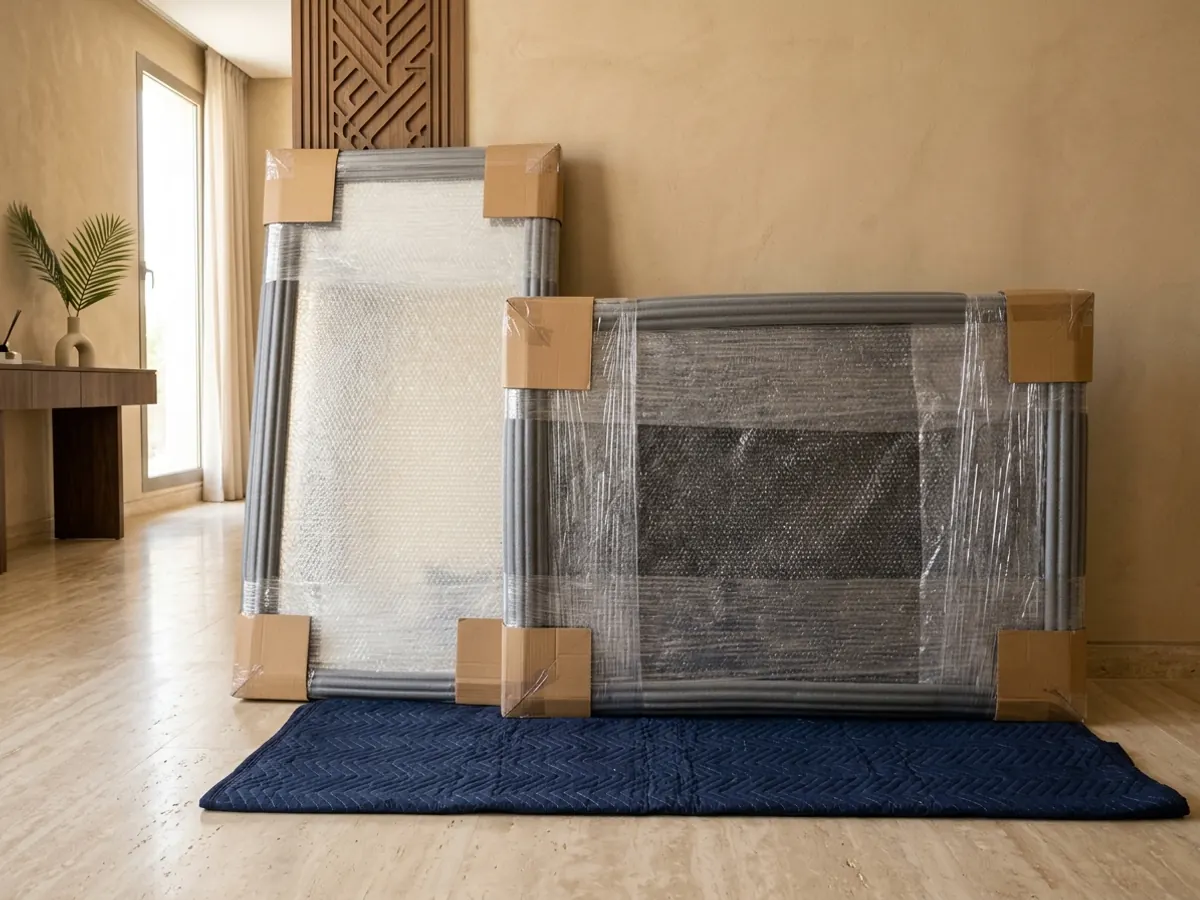
Taken-apart panels are protected at edges and corners and are not laid on top of one another without separators, because rubbing can scratch surfaces. Glass doors and mirrors are wrapped separately and carried in a suitable position.
On reassembly, units are built in a suitable order (base, sides, back, then doors), and the wardrobe is checked for stability and level on the floor, because a slight tilt can jam doors and weaken the unit.
Identify your room components
Pick the pieces and set type and send the summary so the work can be assessed.
Select your room components and the work needed
Delivery details are only asked for when the room is moving to another location.
What to check after the bedroom is reassembled
A checklist you can go through with whoever reassembles the room.
Stability and level
- The wardrobe stands straight and its doors open and close without rubbing
- The bed does not wobble or creak when sat on
- Drawers slide smoothly and return to position
- Inner shelves are in the same positions as before disassembly
Parts and fittings
- No screws or parts are left over without a place
- Mirrors and glass doors are intact and firmly fixed
- Door keys and locks (if any) are complete
- No new scratches on surfaces compared with the pre-disassembly photos
What affects the cost of bedroom disassembly and assembly?
We do not publish fixed prices; the number of pieces and set type change the work considerably.
- Room components
- The number of pieces (bed, wardrobe, dresser...) and the size of each.
- Wardrobe size
- A large multi-door wardrobe is more complex than one nightstand.
- Fastening type
- Ready-to-assemble, solid wood and sliding doors all differ.
- Mirrors and glass
- They need extra materials, care and separate handling.
- Whether there is a move
- Taking apart at one site and rebuilding at another differs from work on the same site.
- Condition of pieces
- Old pieces may need extra care.
Get a quote after sending the details of the service you need.
Frequently asked questions about bedroom assembly
Does the wardrobe have to be emptied?
Usually yes. A loaded wardrobe is heavier and riskier to carry, and the contents can be damaged or harm floors and walls. Empty it fully, including small drawers, before disassembly.
Can a bed be moved without taking it apart?
Possibly, if it passes the entrances and its joints are sound. Often taking it apart is preferable to reduce collision risk and save space. We decide after knowing dimensions and access.
What details are needed before inquiring?
Room components and number of pieces, set type (wood, MDF or ready-to-assemble), any mirrors, photos inside and out, the location, whether there is a move, and a tentative date.
How should bedroom screws and hinges be kept?
In labelled bags or trays per piece and part, kept with the piece. Photographing the wardrobe interior before disassembly also helps return shelves to their positions.
What about mirrors?
They are separated from the frame where possible and wrapped on their own with edge and corner protection, and carried in a position suited to their shape. Tell us about them at the start.
Do ready-to-assemble sets differ from solid wood?
Yes. Ready-to-assemble sets are designed for disassembly but may weaken with repetition, while solid wood may rely on joints that do not come apart easily. That is why we ask the set type.
Ask about your bedroom set
Send the components and photos to review disassembly, assembly and availability.
Related services you may need
- General furniture assemblyFor desks, shelves and cabinets beyond the bedroom
- Furniture packingTo protect panels and mirrors after disassembly
- Full furniture movingWhen the bedroom is part of a home move
- Apartment moving in NajranFor narrow apartment entrances and elevators
- Moving inside NajranHow to describe your location and what coverage is confirmed
Helpful guides before you enquire
- Preparing a bedroom for movingStep-by-step bedroom moving preparation: emptying wardrobes and drawers, sorting clothes, labelling panels and bed hardware, protecting mattresses, and packing first-night bedding.
- Disassembling furniture before movingWhen does furniture need taking apart before a move, and when should it stay assembled? A decision based on measuring and the type of piece, how to keep screws and parts, and what to leave to a specialist.
- Post-move inspection checklistA tickable, printable post-move inspection checklist: verifying furniture and carton counts, checking mirrors and wooden corners, and testing reassembled wardrobes and beds.