

Furniture Packing in Najran — Protecting Your Furniture Before a Move
What protects a wooden piece does not suit a fabric sofa, and what works for glass does not work for screens. We explain packing materials and their uses, then you pick the pieces that need protection and send your inquiry.
- Different materials for different items
- Common mistakes to avoid
- Inquiry based on your pieces
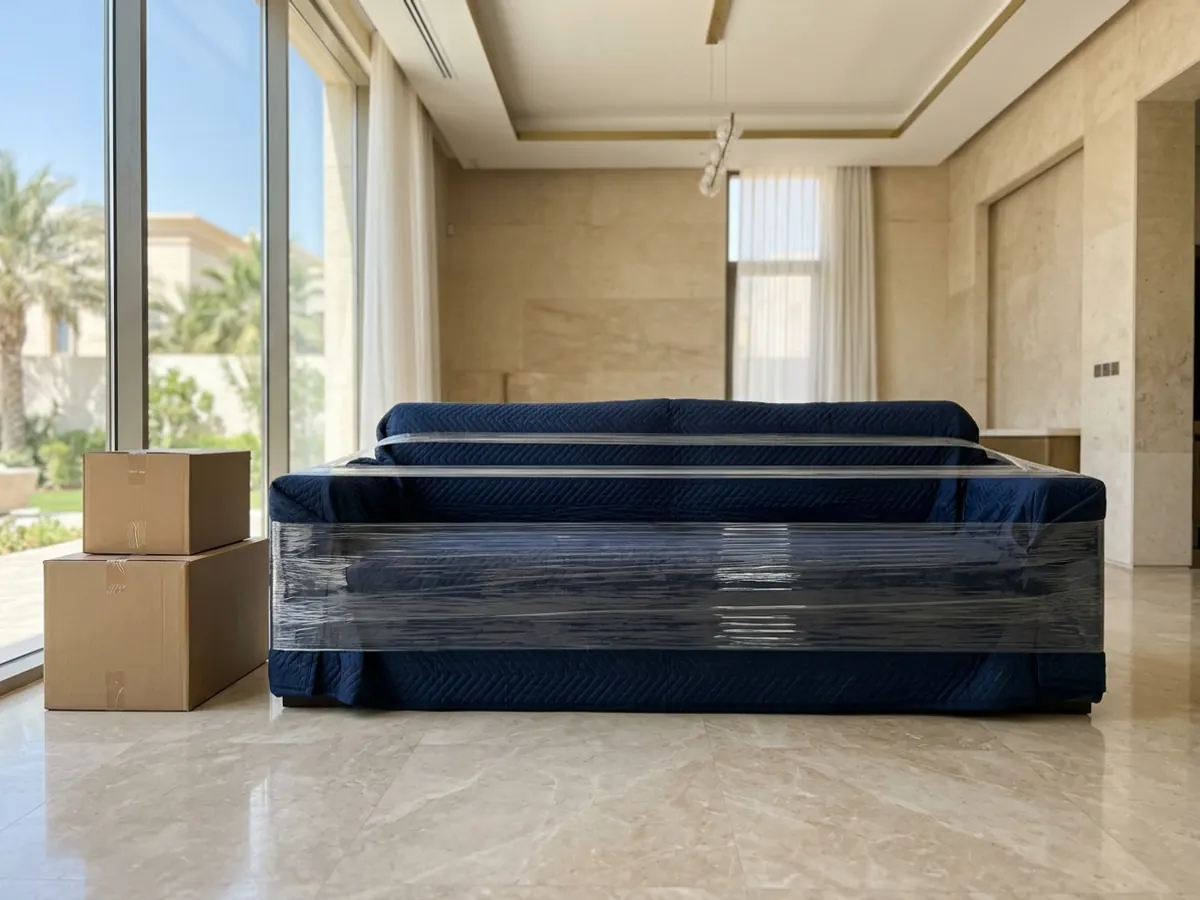
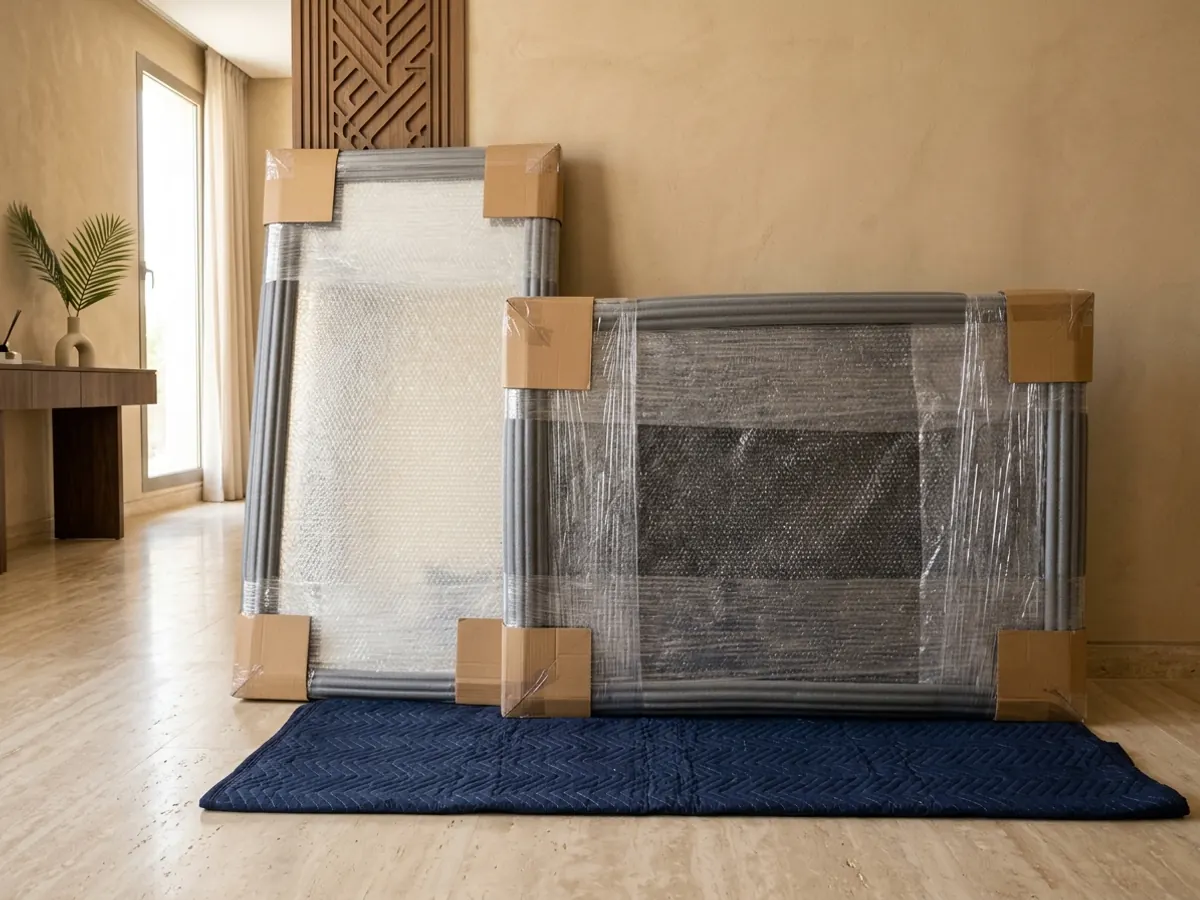
Illustrative AI-generated image of a protection method, not an actual job by the company.
Which protection methods may be used depending on the piece?
There is no single material for everything. Polished wood needs a soft layer before the blanket, sofas need a padded cover that allows some airflow, glass and mirrors need protected edges and corners plus support for the flat area, and screens are best kept in original packaging or as the manufacturer advises.
Tell us the pieces, how many, and whether packing is part of a move, and we review suitable materials. Packing is a service agreed per request, not assumed, and it does not mean absolute protection from every scratch or damage.
What is each material for?
A practical overview of common materials; each has places it suits and places it does not.
- Bubble wrap
Air-cushion padding
Useful as physical protection against light impacts on some surfaces and small items. It should not be pressed directly against a sensitive finish without a soft layer.
- Stretch film
Clear shrink-style wrap
Used for securing, keeping covers, drawers and doors in place. It is a fastening tool, not a permanent replacement for padded protection, and is not wound directly on sensitive surfaces.
- Moving blankets
Padded blankets
Protect large furniture surfaces from rubbing inside the vehicle and during carrying. They suit wood, sofas and appliances when secured properly.
- Cartons
Packing boxes
For organising small contents and fittings. Box size should match the weight of what is inside; an oversized loaded carton tears.
- Corner protectors
Edge protection
Used on corners of tables, frames, doors and mirrors where most scratches and breaks occur.
- Mattress covers
Mattress covers
Help keep mattresses clean of dust and dirt during handling and transport, though they do not replace avoiding sharp folds.
The layering idea: how protection is built
Good protection is not one wrap; it is layers, each with a role: a soft layer touching the surface, padding that absorbs impact, a cover against rubbing, and outer securing that stops covers moving.
The number of layers and materials depends on how delicate the piece is. The diagram is simplified to explain the idea and is not an execution spec.
Specific protection for each kind of piece
Wooden furniture
A soft non-adhesive layer on the finish, then a blanket, with corner and leg protection. Avoid tape directly on varnish.
Sofas
A padded cover or blanket plus outer securing against slipping. Fabric and leather type matter; some surfaces do not tolerate direct plastic wrap.
Bedrooms
Panels and doors protected at the edges, screws and fittings bagged and labelled, and mirrors separated and wrapped on their own.
Mirrors and glass
Edges and corners protected, the flat area supported with a rigid board or doubled cardboard, and carried in a position that suits the shape.
Screens
Original packaging is best if available, never press on the display, and check the manufacturer guide. Appliance detail is on its own page.
Appliances
Prepared per the manufacturer first, then the outer surfaces covered without blocking vents.
Mistakes that make packing less useful
A frequent mistake is wrapping an adhesive or plastic material directly on a sensitive surface, which can leave marks or trap moisture. Another is not securing pieces inside the vehicle; good wrapping does not protect a piece that slides and rubs against others.
Leaving screws and fittings unorganised so they get lost or mixed, and ignoring manufacturer guidance for appliances and screens, are also common.
Identify your delicate pieces
Choose the pieces that need protection and we suggest what suits them and review availability.
Checklist before packing
Sorting and cleaning
- Take small and valuable items out of drawers and wardrobes before wrapping anything
- Make sure pieces are dry before covering them
- Remove detachable parts such as loose glass shelves
- Collect fittings in bags labelled per piece
Documentation and coordination
- Photograph large pieces to record their condition
- Identify the most delicate pieces to wrap first
- Label cartons by room
- Gather the manuals for appliances and screens if you have them
Visual examples of protection approaches

What affects the cost of packing?
There is no fixed price for packing because pieces and materials differ.
- Piece types
- Glass, mirrors and screens need more material and time than simple solid pieces.
- Material quantity
- Number of layers, area covered and number of cartons.
- Sensitivity level
- Valuable or fragile pieces may need extra protection.
- Furniture size
- Large furniture uses more material and time.
- Disassembly needs
- Some pieces must be taken apart before wrapping, which is a separate service.
- Type of packing
- Full protection for pieces versus delicate items only.
Get a quote after sending the details of the service you need.
What in your furniture needs protection?
Choose the pieces to see practical notes for each, then send the inquiry.
Frequently asked questions about furniture packing
What is the difference between bubble wrap and stretch film?
Bubble wrap is a padding layer that absorbs light impacts, while stretch film is a securing wrap that keeps covers and moving parts in place. Stretch film does not replace padding and is not wound directly on sensitive surfaces.
How can glass be protected?
By protecting edges and corners, adding a soft layer on the surface, supporting it with a rigid board or doubled cardboard, and carrying it in a position suited to its shape and weight. Tempered glass and large mirrors may need special arrangements discussed on request.
Do all pieces need the same packing?
No. Wood, sofas, glass and appliances each have their own suitable approach, which is why we ask the piece type instead of applying one method to everything.
What information is needed to estimate packing?
Piece types, approximate number, size of the largest, any glass items or screens, whether packing is part of a move, plus location and tentative date. Photos help a lot.
Does packing include disassembly?
It is not assumed. Disassembly and reassembly is its own service scope that can be added to packing when agreed. State in your request if you need both.
Ask about packing your furniture
Send the pieces, how many and where, and we review suitable materials and availability.
Related services you may need
- Full furniture movingFor the journey after packing
- Furniture disassembly and assemblyFor pieces taken apart before wrapping
- Bedroom disassembly and assemblyFor room panels and mirrors
- Moving household appliancesFor appliances, screens and manufacturer guidance
- Moving single furniture piecesTo protect and move one piece
- Fragile furniture movingFor glass, mirrors and polished surfaces
Helpful guides before you enquire
- Packing furniture for movingLearn what bubble wrap, stretch film, moving blankets, cardboard and corner protectors are for, how to prepare wood, sofas, mattresses and glass, and the packing mistakes to avoid.
- Moving box types and usesA practical guide to choosing and organising moving boxes: matching carton size to item weight, reinforcing bottom seams, room colour-coding, and items never to pack.
- Preparing furniture for movingHow to prepare furniture for a move: a simple timeline, measuring doors and elevators, the disassembly decision, box weight and labelling, and a bag of essentials, plus common mistakes.